I am a product of my culture. Maybe I am a unique expression of that culture; I don’t know. But for me road rules are absolute; they must be obeyed. I know brothers and sisters who love the Lord and strive to please Him in their life and actions. And these same God pleasing brothers and sisters flaunt, flout, stretch and ignore the traffic laws. These laws which I find hard to cross – are mere shadows on the road for them.
Then I came to Turkey.
Here we see two principles at work. The first are the actual laws as formed and legislated. The second is the actual practice on the roads of Turkey.
I noted in the early 1980s, when we first came to Turkey, this extreme dichotomy. Then the practical rule of the road was ‘bigger vehicles’ are right and ‘little vehicles’ aren’t. Traffic lights were considered ‘advisory’. There were traffic policemen out and they were enforcing the actual, legal, legislated road rules. But they were few.
Now over thirty years later, the same basic equation exists. There remains a tension between what is done and what the laws declares.
Now for a dyed in the wool legalist like me I have a conflict. If I drive according to the legal rules, I will be a hindrance on the road. No one will expect what I am doing. This is because drivers just drive. They do this without thinking of the ‘legal requirements’. They only change their driving habits when they are forced to. Driving is a corporate affair – moving like a herd; everyone in the same manner..
But the majority often choose poorly. For example, if you were to reverse engineer the laws by observation, you would come to some strange conclusions. You could conclude it is a requirement that all drivers have a mobile phone in their hands whilst driving.
Recently I was driving through the town of Erdemli. Erdemli, means with good virtue. As I am driving along, I note many pedestrian crossings. They are clearly painted, signed and marked. They have even written on the asphalt to give preference to pedestrians. The authorities are changing Turkish driving habits.
And so, I am going along, seeing all these pedestrian crossings. And then, just ahead, I note one with people waiting to cross. Well, I should be part of the positive change, shouldn’t I?
So, I brake to stop and allow the pedestrians to cross.
Then came the panicked screeching of tyres as the small lorry behind me struggles to stop before we kiss. He never, in a million years, expected me to stop ‘for pedestrians’!
And the poor pedestrians; they want to cross the street, and one lane has stopped – but the other? Who knows?
The driver of the lorry catches up with me and inquires why I had stopped. I explained there was a pedestrian crossing. He expounded, with energetic and broad hand gestures, “this is the roadway, the roadway….” To him, vehicles have an absolute and unquestionable priority.
So, the dichotomy remains. Do you drive according to the rules – and be an active hazard on the roads? Do you, keep to the rules and cease to be predictable by other road users? Or, do you drive ‘with the flow’? Do you join the herd?
The final stretch to our destination was a built up area. It may be towns and villages or just a build up of structures along the road. Anyway, what is the speed limit? And, does anyone care? To be predictable, I moved with the flow of traffic. I drove at a rate not faster than the rest, nor slower.
Was my speed technically at the correct level? The inner legalist within me declares “nay“. But it was safe and predictable.
What should my response to the new pedestrian road crossings be? Well, it is a good change. I want to support this positive development. Besides, I spend a lot of my time as a pedestrian.
Therefore, as I drive, wisdom would have me look further ahead. And when I see waiting people, to slow gradually to a stop.
Ultimately, I want to be part of the solution and not part of the problem.
Hmm.. that was ‘interesting’ and totally ‘unexpected’.
We were on the way out to recommence our food distribution to the Syrian refugee field workers. On the way, we had a short discussion about English. I was clarifying the meaning of the common English word ‘sure’. One example I gave was “I’m sure this is right.” And someone raised a counter point about the word ‘positive’. Again, an illustration like: “I am positive I left it right here” was given.
Routine traffic stops are common in Turkey. They do not stop every vehicle – there is often a winnowing, a selecting of whom to stop. There are two kinds of traffic stops. The first is to issue fines for offences committed (speeding). The other kind is a routine stop – checking for various things.
This was a routine stop and all the officer wanted was to see my driver’s licence. This was not an unreasonable request. And for me, there was no problem because I always have my driver’s licence with me. Of this I was sure. In fact, I was downright positive my license lives in my wallet. This is a product of my upbringing. I learned you MUST always have your driver’s license when you drive.
So, I had absolutely no qualms when I reached for my wallet….
Now, regardless of qualms or no qualms, I confidently reached for my wallet. No matter how thoroughly and diligently I searched, I did not find my driver’s license!
In Turkey, this is an undisputed offence. There is no point in declaring: “It is my other trousers, I forgot it at home or whatever.” All such statements are pointless and utterly meaningless.
The officer could have hit me with a 4,000 fine AND having to appear in court (!). The fine would have been bad. Appearing in court would have been very disruptive and frankly unappealing.
And, he could have written me up for not having a notarised translation of my license. Thankfully, he didn’t make either of those two choices.
He wrote me up for not having my license to present. T, always going the extra mile, had taken a photograph of her and my license. We showed this to the traffic officer on her phone. Thankfully, he accepted it as proof I have a license to drive. This was a gift. For how could he know if I possess a license?
But then it was in English, hence the requirement to have a notarised, translated copy. He asked for my father’s name, a key Turkish requirement. And asked where it was written on my license. Well…. It isn’t.
The upshot is he wrote the ticket with this photograph of my license. My offense: not having my driver’s license to show when required.
So, having earned a new piece of paper requiring a payment, we carried on to our food distribution. And, I continued to drive. The officer stated there was a risk of another fine. He felt any reasonable traffic officer would not write a second ticket.
All this was unintended…. I was sure it was in my wallet. Indeed, I was positive. But now, I had no inkling to its location. I never move it about nor take it out. Nothing, I do nothing clever with it. It belongs in my wallet, and my wallet belongs on me. So, whenever I am called upon to drive, I have my driver’s license.
Needless to say, we did not find it where I expected it to be.
Oh, on returning home, not encountering any more traffic stops, we found my driver’s license. The only conceivable place to look was my English wallet. And true enough, there we found it. When we arrived back to Turkey, it never made the transfer over. Yani, I’ve been driving without a license for nigh on three months (!). God is Gracious!
Interestingly, previously and for a few days I have been ‘feeling’ that I should get my license translated and notarised…. But I did not follow through. If I had, this whole episode would not have happened. Except what would have been a simple meet and greet with the traffic officer.
Anyway, it was a worthwhile – and tiring – day with the refugees. We went to an encampment we have named Isken 1 which is teeming with children. There I spent the time holding hands with the children, walking about, sometimes in a great circle. Over the years we have built up relationships with umpteen children.
We are scheduled to go to the Syrian refugee children on Thursday, the second day after this incident. Happily we have found my license and AND we will get it translated and notarised before we go. One fine is one too many for me.
Routines in life, I find, are beneficial. They help me attain my goals. And they help me in maintaining the things I’ve identified as important in my life. And when life behaves itself, I can freely indulge my daily regimen.
My daily custom begins with a moment on the scales. This is my daily exercise of accountability. I do this as it reflects my eating and exercising habits. I find this to be helpful albeit sometimes painful to read. Some writings on weight loss and related topics discourage daily weigh-ins, recommending a weekly schedule. For me, daily is most fruitful.
But, there are times when travelling or some upheaval and my routine is often impossible to maintain. Sometimes small things arise which can upset my daily wont.
Thankfully, this is not the case at the time I write this. However, our annual sojourn in the UK can and has knocked me for six.
On the day I commenced writing this, my morning weigh-in encouraged me as I was slightly down. This was gratifying as for the previous several days my weight had remained constant. I am still labouring towards my target weight – so constant is not heartening. Mind you, it is better than going up. I can gain weight at the drop of the hat, or, with one rogue treat.
The truth be told, I can be easily discouraged.
I did not select my ‘target weight’ by trouser size or some aesthetic criteria. I have discovered living at my target weight is the most effective means of lowering my triglycerides. And my blood glucose levels are also reduced into the ‘normal’ range. Medicines are good; in fact, they are essential. And so is eating right. Taking regular exercise is a must. All of which I do. But the absolute key element for my body is having and maintaining a healthy body weight.
Medicines and exercise are vital aspects. But, like a three-legged stool, the third leg, ‘weight control’ is crucial. For me and my body type, I can not‘have my cake and eat it, too’.
On the positive side, I am encouraged that my body is highly efficient. My system scours every morsel of value and every calorie from whatever I have ingested. That is a blessing. In times of famine it can mean the difference between life and death. But in times of plenty, my body is perennially preparing for days of famine. Historically this was for good reason. Throughout history, times of famine habitually followed days of plenty.
In Scotland, whence my forebears originate, there was an inescapable cycle of famine. Life consisted ‘in the throes of a famine’ or ‘had a famine’ or ‘beginning a famine’. It flowed like a relentless rhythm. Those who adapted, survived. I am a descendent of those whose survived.
So, on the good side my body is always ready and preparing for shortages and famine.
As previously stated, this is essentially a great thing.
However, things are complicated. My body is also genetically disposed towards fatty-oily foods. Fat and oil are good sources of energy. But, let the reader understand, these foods are excessively high in calories. Some people are naturally drawn towards sweets and cakes: not me. Before my diagnosis of diabetes, I ate and enjoyed sweets and cakes. But they did not enrapture me. I enjoyed them, but I didn’t crave them. But show me any fried food – almost anything fried, and there I am weak and tempted… Cauliflower – yuck; but deep fry it, I’m there with my bib on.
This seems a good time for a confession. In the past, I often ate a piece of cake just for the whipped cream on top. The cake was just the means to the end – something to be more tolerated than enjoyed. The goal was the wonderful, delicious, rich, cream on top; and the more, the better.
Growing up, there was a special dish served at Christmas time: rice in sweetened whipped cream. Fantastic; now that is the way to consume rice!
However, these types of foods are the enemy of all trying to control their triglycerides.
And triglycerides are serious. Too high a level in the blood and they clog the arteries. This leads, ultimately, to a sudden and painful death.
I know several people who have had heart bypass surgery. This was caused by the clogging of their arteries. It is anything but a simple, carefree operation.
My Experience
I have experience losing weight. Most people have experience in losing weight. There are real problems and struggles with the act of losing weight. But the ultimate problem is keeping it off. For, it seems, the norm is we who lose weight, typically end up regaining it. Sadly, this is often compounded as it is regained with interest – I lose five regain six. The final state is heavier than before I lost weight.
Not that long ago I actually reached my ‘target weight’. Whoopie!!
At that time, both my triglycerides and blood sugar were within that which is described as ‘normal’ levels. Being at my target weight was great. There were no downsides, it was a great result; I was living in a healthy state.
However, sadly, I didn’t maintain it.
Slowly, slowly over months, my weight crept back up. I didn’t ‘fall off the wagon’ as much as, little by little, slid off. Wee compromise followed wee compromise… changing my eating pattern one compromise at a time.
So, my life experience teaches me that aiming to lower my weight is a laudable target. I find it ironic that my getting to normal, can be such a rewarding target and goal. That which many others are at ‘au naturel’ becomes my goal. Ah, to be normal.
Through my own experience I learned lowering my weight brings my triglycerides under control. Of course, this is with my medicines and exercise.
But this level of triglycerides was only sustained whilst my weight was at that level. As my weight rises, so do my triglyceride and blood glucose levels. I maintained my medicines. And I continued to eat a fairly disciplined menu – with my own peculiar ‘cheats’. My daily exercise routine I maintained. It was interrupted for a season due to a bout with shingles. This hiatus lasted for many, many months. Regardless as to why, when my weight goes up, so do my triglyceride and my blood glucose levels. Alas…
Life it seems, does not offer a pick-and-choose, smorgasbord of selecting the things I like.
I need my medicines.
I must continue to exercise.
And, I need to keep my weight under control.
Sixteen Years Ago…
My doctor diagnosed me with diabetes and hypertriglyceridemia 16+ years ago. And it seems, from the beginning, it was my triglyceride levels that concerned my doctor. He treated it as more important even than my blood glucose levels.
Over the years I have learned there is no ‘magic-bullet’ – the internet not-withstanding. There is no quick cure. In fact, there is no cure.
But, it is possible, successfully, to manage diabetes and hypertriglyceridemia. This is true even if I fail to do so from time to time.
My personal challenge arises from my weakness for oily foods. I can easilyrebufftemptations for sweets. But put fried foods before me – almost anything fried – then it is a different story. A standard British breakfast – fried eggs, fried bacon, fried sausage and, unbelievably wonderful, fried bread! Ah, heaven! And as it hastens death… one may get there ahead of time…
Crips, deep fried anything, virtually all modern ‘fast food’, and, the temptation, for me, is great.
Truly, it is great.
I freely confess, “I love fried foods.” The texture, the taste, the crispness, the flavour and yes, the oily nature of the food. I love it all.
Let’s pause for a practical example, another confession from my life.
As a diabetic I know starchy potatoes are not on the list of recommended foods. Potatoes – in all forms are high on the Glycemic Index. And, they are also high on the Glycemic Load index. Hence, I would be wise to avoid potatoes.
They, in all forms, have a dramatic influence on my blood glucose levels.
Now, I can avoid boiled potatoes, mashed potatoes, baked potatoes, scalloped potatoes with ease. But…
But… but put crisps or better yet, French fries before me… hot, fresh from the hot oil… Well, that then, is another matter altogether.
I know they affect my blood glucose as all the other forms of potato. I know they are not good for me. Added to this, I know they will have a negative impact on my triglycerides. I am not ignorant. And, I habitually refuse potatoes in every other configuration for the reasons above. But, in the deep fried state…
This causes me to want to whisper along with Gollum in the Lord of the Rings, “my preciousss”…
A Poor Comparison
As an alcoholic who can not drink even a little, nor can they indulge in a ‘wee treat’, so I face a similar situation regarding oily foods.
Now, I am in no way dealing with something as serious as alcoholism. But, it seems, like an alcoholic, I can not abide even a small stumbling block. For me, there is no such thing as a wee bit of fried foods. A little opens the door to a little more.
For me, fried foods are a gateway food. Once tasted, it leads me off my ‘straight and narrow’. It leads me; I do not have to follow. But I want to!
Sadly, I have experienced this. I am not speaking from logic, study or observation. I speak from my personal experience.
In years past, I made the decision. I refrained from all fried foods. I acknowledged these foods as my greatest weakness and a detriment to my health. As this is my weakness, I recognised the danger they present. This does not apply to others; to those who can readily imbibe with no bondage involved.
And in the beginning I abstained from all fried foods. This was good, and I found it was not too difficult to maintain.
Then the day came when I would pitch just one French fry, from my wife’s portion. It was one wee compromise…
Following these singular French fries, I graduated to ‘a few’ from her plate.
Finally, as time passed, I would have my own, personal, portion. Maybe she tired of sharing – but I do not think so. I just wanted ‘more’… “…my precioussss…”
And, sadly, from there it was a minuscule step to deep fried onion rings. Once I crossed that threshold, then come McNuggets and so on.
Hypertriglyceridemia here I come – and on the express!
What I have done, I have done…
Ah well, what I have done, I have done. What I have chosen, I have chosen. That which I indulged in, I have indulged in. All that is in the past. What matters now is what I do about it. The past is unchangeable, the future has not yet been written. The key is what I decide today…
And so, that which is in my hand to do in response, this I need to focus on.
Yes, I have a genetic weakness towards fatty foods. Mind you, this is no excuse, I am still making the choices. It may be harder in this instance, for me, but, ultimately, I am still making the choices. I am still fully accountable – my weakness not withstanding. It may be a temptation others do not face, but they have their own areas of weakness. This is one of my weaknesses – and, ultimately, it is me who makes the choice.
Knowing the problem, knowing my weakness, empowers me to face it. Then I can put into place measures to assist me in keeping to my chosen path. These measures mitigate and weaken the temptation when it comes. And the temptation will come.
It is easy for me to overcome a ‘theoretical’ temptation when there is nothing before me, or it is an abstract proposition. At those times I can easily say ‘no’. There is no struggle; it is easy-peasy. But when I am hungry, or my blood glucose is low, well this is a different equation. When my mind is being given less fuel, it is difficult to choose the right thing. It is difficult; not impossible. And when I face the easy prospect of indulging in something I crave – that is hard. Especially, when the object of my base desires lies, tantalisingly, just before me. And I can easily reach forward and seize it. Well, that is an immeasurably more difficult proposition. It is not insurmountable but it is difficult.
Having some French fries is not morally reprehensible. In fact, it is something which has become a cultural norm. In fact, it is even offered at breakfast in some establishments!
From a societal viewpoint – it is a non-issue. So I gain no help from society. If eating French fries were culturally unacceptable, then that would aid in me in turning it down. If no one else freely ate them in public – it would be easier for me to refrain. But as all see it as fully acceptable and normal – I receive no help there.
So, as one who has a weakness towards oily foods what can I do? What can help me overcome my temptation? Or what will help me attain my goal of a healthy weight? And what will aid me in maintaining healthy triglyceride and blood glucose levels?
Foundational Decision
Well, it begins when I make a foundational decision. I decide, “I will refrain from eating these food types for the rest of my life,” even though these foods are fully acceptable for normal people. And although eating French fries is not morally wrong.
With a change in my eating, like an alcoholic, there is no end date. This a life choice – a life long choice for me. It is not a diet. This is not ‘until I get my weight down’. Nor ‘when I arrive at where I desire it to be’. But, this is how I will now habitually live – irregardless of my weight. When I arrive at my ‘target weight’ – nothing changes. For me, there can be no such thing as a ‘treat’ of fatty foods.
That is the startingpoint. Without this decision, nothing will work!
Years Ago…
Many years ago I worked for a local council. On my lunch break I would meet with a fellow Christian. Every day, we would eat lunch together and chat. After we ate, he would explain how he found it impossible to quit smoking.
Day after day we engaged in the same conversation.
He would tell me how his wife tried but could not help him. At other times he would explain how the pastor of his church tried, but could not help him. He told how his doctor could not help him. There was a time the elders of his church tried, but they, too, could not help him.
He knew all the facts about cigarette smoke. He knew the health damage that was being wrought…
And all the while he was chain smoking cigarette after cigarette. At the end of each lunchtime, the floor was liberally littered with seven to ten cigarette butts.
His situation looked hopeless. I thought nicotine had such a powerful grip over his life, mind and will as to render him powerless. The problem, it seemed, was the hold of nicotine in and over his life and living.
And then one day, the Holy Spirit put a question in my mind. And so, I asked him if he wanted to quit. In a candid moment, his heart-felt reply was, “No, I enjoy it”.
That was the real impediment to his quitting smoking. It was not nicotine; at least not alone. The obstacle was he himself. He enjoyed it and, all his protestations aside, he did not want to quit.
There was absolutely no help and literally no hope as long as he still wanted to smoke. Nothing worked to help him stop and nothing could help him stop. Why? For, in his heart of hearts, hedidn’twant to stop.
Likewise, for me, for any personal challenge, any aspect of my life that plagues me. Until I want to make a change; until I acknowledge the problem AND want to address it – there is no hope.
My friend acknowledged the problem. He knew the damage that was being wrought in his body. But he did not ‘want’ to change. And he didn’t change.
If I acknowledge the problem if I acknowledge I must change – that is the beginning. But I must continue. I must additionally resolve to do whatever is necessary to change; to address this problem. I must be prepared for me to change. Then and only then, there is hope and help.
No one can do it for me. Nor can anyone change me. In truth, no one can make it happen for me. Even the Lord God Almighty waits for me to make the choice. He does not forcibly change me. He honours my execution of the ‘free will’ He has endowed me with.
Agghh – Help
Sometimes people pray and they pray desperately for ‘God to do something – to take something away’.
But, the truth remains, often it is they themselves, who hold the key to the problem.
They can acknowledge how wrong or harmful something is. But, if they are content to live with it, they will continue to live with it. Even if it is only on some subconscious level.
This is a complex situation, and it is not down to any one single element, but wanting to change is part of the answer.
It is possible, perversely, to even desire the situation. We hate some aspects of it… but, on balance, desire it.
And, maybe more to the point, at times we can be unwilling to stop it.
Life is filled with a myriad of situations which we hate or are disgusted with. Sometimes we accept them as we feel we ‘deserve’ to suffer. There are times we feel we must pay ‘ourpenance’ because we have done something very wrong.
And sometimes fear paralyses us. It may be fear of change, fear of rejection, fear of being alone that raise its’ ugly head. And, often, it is the fear of what may be that binds us and renders us unable to do anything.
But, Almighty, Sovereign God did not make us as an automaton. We do not live by instinct alone. Unlike the animal kingdom, we decide what and when we act. Whilst we can act ‘instinctively’ we can decidedly decide to act contrary to our instincts. Our ability to act in ways at extreme variance to our instincts and our nature sets us apart. We have free will. And, in our lives, we decide. And God has established this.
Hence, when we have a problem, we must decide what we want to do about it.
Here, often the Lord God of the Universe honours our free-will choice. Even when this results in our remaining in bondage and pain and suffering.
Why?
Because it is what wehavechosen.
The one exception is the Grace of God which is over all. There are times, in God’s Grace, that He sovereignly changes our lives. But He desires our involvement. Almighty God wants us to be involved. His desire is for us to grow. He wants our involvement in our changing to something better.
The resources of Almighty God are the source. But it begins with us. This is true whatever our personal challenge is.
The Way Forward…
As stated above, one of my many challenges is my genetic weakness towards oily, fried foods. This is a small, socially acceptable weakness. And yet it affects my health and has the potential to both cripple me and, ultimately, kill me. Left to my natural inclinations, I will be obese.
There are other, not so socially acceptable challenges which I face. And the solution to these follows the same pattern.
First, I must acknowledge the problem. This the starting point, but critically not the only requirement.
Second, I must also acknowledge that it is I who must change. This is essential, but is still not enough. The solution is not a change in my circumstances. Nor a change in another individual – it is I who must change.
Third, I must also desire the change – whatever it takes; whatever changes Imust make.
A Hard Thing To Do…
This last point includes the prospect I may have to humble myself and ask for help.
We all need help. We need help from God foremost. But God also has ordained and chosen to use the Body of Christ – the Church. More often than not, Almighty, Sovereign God choses to use the Body of Christ in our lives. I am not referring to the ‘institutional church’ here – although Sovereign Lord can choose to use that. I am referring to the individuals who make up the Body of Christ – the simple, run of the mill, often untrained people who follow and are disciples of the Christ.
God is God. He is Sovereign. And He is free to use whatever means He so chooses. As God has gifted ‘free will’ to us, never forget that God, too, has ‘free will’. He will choose what He does.
He can touch us and change us in the twinkling of an eye – by His Grace. However, it is not the only, nor even the primary method He uses.
More often than not, He calls upon us to make better choices, correct choices.
Jesus said He was ‘the Way, the Truth and the Life’.
A ‘way’ is to be walked in. That requires effort, ongoing commitment to follow, to walk continually in the Way. ‘Truth’ – but we often are ignorant of what is true. We do not do the right thing because we do not know what the right thing is. Learning the Truth from God informs us to the right actions, reactions and manner of living. Finally, ‘Life’, which is in living but according to the Way and the Truth.
This involves us, all of us, and all our mind, might and will – and all the time. And, as a result, it is in this manner we, slowly, change our character. Slowly, slowly we change our habit patterns. One step at a time, we break from the past and set a new course for our lives. This is most important. He is continually desiring to build our character. He desires to re-make us in the image, character wise, of His Son, Jesus Christ.
Talk about Cognitive-Behavioural Therapy (CBT)! This is God’s own lifelong process in our lives. All to be applied and executed under God’s direction. And in tandem and with the power, strength and example of Almighty God. With us, He is working in and changing us.
What It Means…
And, often He calls upon us to humble ourselves. He instructs us to confess our faults one to another. And then to receive help from one another!
However, I am loath to confess my faults. I prefer the “I’m okay – you’re okay” approach to life and living. Especially when I know it is not true. I fear: “If you knew of my struggles, you would not want to be my friend. Or you would tell the world.” Or “you would reject me – disown me.”
I am reticent to confess my struggles to anyone, ever.
And especially not in a blog like this which anyone can read.
I apply this to the big issues in my life and the little issues. Even to my socially acceptable example of my weakness regarding oily foods. It doesn’t sound serious, and it is not salacious. However, this ‘weakness’ has a great detrimental effect on my health and morale.
However, I need to be open and confess my weaknesses. This is important, especially to those around me. And to those who love me. And to those who tolerate me. Even to those who despise me.
IfIdecide, and openly acknowledge both the problem and the solution, then others can assist me.
But, if they do not know, they could inadvertently hinder me. In this poor example from my life, my problem is not morally reprehensible. But it is important. My wife can assist by not offering foods I struggle to reject. My friends can help in what they offer and encourage me to eat. They help in not offering fully acceptable foods for them, but which are stumbling blocks for me. Let me affirm: they can eat what they want. They are free to eat in front of me. That does not stumble me. But, if they refrain from asking me to join them, that helps me.
When can people assist me? When I have humbled myself and declared my weakness. And when I have declared the course of action I have chosen. Then God can and will help me.
Conclusion
Ultimately, it is I who needs to change. It is my character, my basic choices which must change. And I am intimately involved.
God helps.
And God gives Grace.
God provides strength to make the right choice – but it is still my choice.
God prods me to the right path – but I must still choose it.
This is a partnership.
And this partnership teaches me more about God, His Character, His Faithfulness, His Grace, His Patience, His Long-suffering, His patience and more. And it is through working together with Almighty God in my life I intimately ‘grow in my knowledge of God’. This far more powerful and awe inspiring than a momentous and momentary demonstration of God’s Almighty power in my life.
Funnily, if I eat correctly, and deny myself what others can eat with impunity, I am blessed. It is I who reaps a health benefit – no other.
When I deny myself various socially acceptable ‘treats’ there are automatic positive results. By denying myself these treats that others eat with impunity, I am learning perseverance, long-suffering, endurance. All these things fit into the Gifts of the Holy Spirit. And all this is included in what we are called to do and to be as followers of the Lord Christ. These give me power in and over my life. Rather than been driven and tossed by my basic instincts and desires, I choose my course, and by the Grace of God, walk therein – and reap the positive rewards.
Strangely, we accept the logic of the teaching of Christ “what you sow, you will reap”. We acknowledge this as a self-evident truth. And yet in our living, in our choices, we ‘sow’ to our instincts and desires hoping to reap a good harvest – which has never happened and cannot happen.
There is a natural reward for doing right because it is right.
The ‘meaning of Life’ is not in indulging my desires. The ‘fullness of Life’ is not in living ‘naturally’. There is an ‘Abundant Life’ which is available to all. It is God’s desire we know it, live it. His goal is we would experience this practically and not just confess it theoretically. All of us, regardless of our circumstance and regardless of the bad, even catastrophic choices we have made in the past.
However, it does not mean me indulging my passions for oily foods.
True Life, a life without regrets, absent of the negative consequences of bad choices can be mine. And it can be mine today. It is difficult – it goes against my natural inclinations. But it is fully achievable here and now.
This is true for me… And this is true for you,whatever your personal challenges are. Whether those challenges be light and socially acceptable as my example – or whether they be socially reprehensible or not. There is hope and there is help.
An Abundant Life is in actively living, being cognisant of the choices I am making; Life is in being like ‘Him’.
Good things begin and, well, not-so-good thing also have a beginning.
In my case the commencement was on 1 March 1985.Thus began a new experience, a wee problem, with the Turkish authorities.This was not limited to me but involved everyone involved with a small Christian gathering in Adana, Turkey.
Although we as Christians had broken no laws, everyone associated with the fellowship was arrested.The first collected by the police were from a nearby town and were held for ten days. Ironically they were not even believers. Next were the Turkish ladies, single men and a married man. They were there for nine days. My English colleague was next and held for eight days. I was in the last tranche to join them.I was held for a week.
Over the course of the time we were held, we were questioned, fingerprinted and photographed.To ensure that everyone would know about us, one day we were paraded before the assembled press.Photographs were taken as we stood before a table laden with our Christian books.The Bible had prominent placement.For one photo the other foreigner and I held up the Bible in front of us smiling. This book has lead us to life and freedom – nothing to be ashamed of.
At the end of the week, 7 March 1985, we went before an investigating judge.
In response to the judge’s question, we identified ourselves as ‘Mesihçi’ – a native Turkish word for ‘Christian’.We eschewed the term ‘Hristyan’ – the common Turkish term for Christian.We did this because it carries a wealth of negative emotional baggage.Consequently, the trial was suspended whilst the judge validated the term ‘Mesihçi’ as being bona fide.
The judge requested a determination from the Religious Faculty of a prestigious university in Ankara, the capital.Four months later, 11 July, we were again assembled in court.There, the term ‘Mesihçi’ having been validated, was accepted and we were officially ‘acquitted’.
Acquittal declares there was no crime to answer.Unfortunately, being acquitted is not the same as no consequences.All the Turks were banned by their families from having any contact with the foreign Christians.
Indeed, it was immediately after our initial court appearance, I lost my job at a local utility. All the newspaper articles had included our names and places of employment. This proved to be far too embarrassing for my employer.
However, there were still months on my existing Residence Permit, so we continued living in Adana.In due course, I applied for a new Residence Permit.
*****
Now at this time, within the Western church there was a theological fad which had gained prominence. It was about the nature of ‘faith’ and the inherent dangers of ‘negative faith’.Fundamentally, it declared faith is extremely powerful – for our good and for our ill.
Of course, I am talking only of my understanding of this teaching. I may have been very mistaken as to its core points.
It recognised that faith can be ‘positive’ thing. Conversely, it was argued, at times it can be ‘negative’ influence. For example, positive faith declares,“God will enable me to endure this challenge”.Negative faith states, “It is hopeless and I can do nothing, this is my undoing.”Both of these are statements of faith, one positive and one negative. One statement lifts the individual up and focuses beyond ourselves and onto He who will help us. The other focuses on the problem and extrapolates the difficulties and declares defeat. Its effect is to settle a person down into the mire of their despair.
The take-away of this teaching was; if you ‘confess’ negative faith, you produce negative outcomes.Basically, you ‘speak them into being’. And, by the same token, if you declare positive faith, you will see a positive outcome.
The teaching basically called for believers to always profess a ‘positive‘ faith, an affirming faith.The corollary, was to avoidat all costs negative faith and negative declarations.
I suppose you could think of this as a variant on the teaching that we reap what we sow.
In 1985, there were between 50 and 100 Christian workers in the country. This was counted regardless of anyones denominational affiliation – this was the total of all Christian workers in Turkey.There were but one or two tiny churches made up of people who were not previously nominally Christian.Basically, in all of Turkey, there were only these 65 odd people ready to share the Good News. At that time, the population of Turkey was just about 50,000,000 souls.
And so, I knew the need in Turkey; I felt a call to the country.I reasoned, reasonably enough, that God, who is Almighty and All Powerful could provide the Residence Permit.Of course, I did not believe just He ‘could provide’ but rather He ‘would provide’.A single letter a ‘w’ instead of a ‘c’, but a world of difference in meaning.
I believed He was well able to keep us in Turkey.Which, by the way, is 100% true.
It was an easy calculation to recognise the tremendous need.There was then and is now, a continuing need of people to share the Good News in Turkey.
I believed we were part of the solution.I believed in the need.I believed in the compassion and love of God for this people.I believed in the Sovereign power of God.
I kept a positive faith viewpoint.I knew my God was able.The need is great in Turkey.I believed I had been called to this place. I reasoned: “What is man or the son of man in the face of Almighty Sovereign God?”I knew God could provide our residence permit.But, I went further, and I believed God would provide our residence permit.
I entertained no thoughts of doubt.
As we waited, some intrepid people had the temerity to ask questions. “And, if you don’t get your residence permit, what will you do?” they would gingerly posit.This was not an unreasonable question.I was not a bachelor, living on my own. My wife and I had three young children.
My consistent response was abrupt and firm, “No, God is able, God will provide our residence permit!” Sometimes I would add something about negative faith as a kind of rebuke.
Time relentlessly ticked down; I remained steadfast in my positive faith with my steadfast rejection of any negative “what ifs”.I believed.I had firm faith.I was steadfast.
And then the day came.
I attended the police department.
There they told me that our application for a residence permit was rejected.
There was no appeal process.Nor was any reason given.
We had to leave the country in short order.
Now I was fully unprepared for such a result.I was not prepared emotionally.I was not ready practically.I was not prepared spiritually.I had no plan ‘B’.
We had one child about to begin the new school year.The second was about to begin kindergarten.We had no plans to move.We had a house rented.We had a car.Where would we go?How would we get there?What would we do with our house full of belongings?What would we take with us?What could we practically take with us?Oh, and where would we go?
We decided to go to Turkish Northern Cyprus.This was the closest foreign country we could easily travel to.It was just a four hour ferry journey away.And it was Turkish.
Early in the morning we loaded the car and drove several hours down the coast to the ferry.At the port we waited and faffed about.Only then we learned I lacked the correct insurance to drive the car in Cyprus.We had to return to Adana.
To say we were not in the remotest prepared for this outcome is an understatement.
I had faith.
I had positive faith.
I had entertained no ‘negative faith’ whatsoever.
What I sought was positive, wholesome, logical and reasonable.
All that is true; but it was notthe will of Almighty God.
We confess that He is Lord.Declaring this we recognise He has the right and prerogative to do as He pleases in our life.He is Lord. And yet He desires that we should express our feelings and desires to Him.But, if He is Lord, I must always recognise the decision rests with Him.
As followers of the Christ, we seek wholesome, appropriate, clean, honest, moral and up-right activities.But such activities, whilst good, are not automaticallythe Will of God for us at this time.
Just as we, with the gift of ‘free-will’, decide according to our own criteria, so Almighty God decides according to His purposes, His knowledge and His love for us.We cannot assume to know the Mind of God just because something is ‘good’ and we desire it.
*****
And so, today in 2018, I find myself in a like situation.Once again we have applied for residence permits.It is a logical, good, wholesome, desirable thing. The need is great.We have a place of ministry and service.
But, hand on heart, I do not know if it is His Will we have a residence permit.
It has been a complicated and awkward process.I have not fought the system, nor squirmed over the expense.It was what ‘I believed’ the Lord put in our hands to do.I have executed my responsibilities faithfully; however, the results are with God.
I have a firm conviction it is easy-peasy for Almighty God to provide a residence permit.But our life goal is not in getting things, or living in certain places or doing certain things.Our goal to know Him.The purpose is growing in my relationship with Almighty God.And that takes place anywhere and everywhere and doing whatever.It happens with a host of activities both so-called ‘religious’ and so-called ‘secular’.
It is easy to say or write, “His will be done”.
But, truthfully, this is something I desire to be a reality in my life.I know He knows best.
From time to time we find a wise and experienced individual and we go to them and ask for guidance and wisdom.We recognise their wisdom.In Almighty God, I recognise the fount of wisdom and I know His heart towards me is love.Ultimately my aspiration in my living, is to change, to be like the Lord Jesus Christ in character. Where I live and what I do is secondary to that.
At the time of writing this, we are, in essence, living in limbo.It is difficult to make plans as I do not know if we will be here. Firm commitments more than a fortnight away are difficult to make.
Normally by this time of the year I will have purchased our flights to Britain.It is one way to snag a good price. Not this year.I do not know when will we fly?
But we live in peace.There is no tension, no stress.We are busy about the tasks at hand.
Yes, we await the SMS message that will declare the outcome of our application. But I am not checking my phone multiple times a day.
God is good.God is All Powerful.God is Sovereign.God is Love.God is a rewarder of those who seek Him.God has promised to never leave nor forsake us.
And so we, happily, await the time, in the Lord’s timing, that we learn the result.
Whatever the final outcome; God is Sovereign, God is good and God is with us.
It is only recently that they require a health check as part of the residence permit process.
I understood it to be a half day task. We scheduled our appointment at a State hospital. And it was on the day before we were to submit our application for a residence permit. I really believed it to be a half day task. Our helpers in this task did not suggest otherwise.
Alas, if only it were so.
For our health checks we chose a large teaching hospital near Kozyatağı in Istanbul. We had to commute to the hospital as it was not near to our lodgings.
To make things more trying, the various departments are spread out over the campus; each building standing independent and on its own. While at the hospital we observed various patients, being wheeled down the roads. They travelled not only in wheelchairs but also in their hospital beds.
The health report is not like visiting your local GP. Over the course of our time, we visited; x-ray, EKG, Ear Nose Throat, Eyes, Internal Medicine, Heart, Psychiatry, Infectious Diseases, Neurology, and general surgeon. Too many to remember; I’ve lost count. The process means we need to visit all the appointed doctors. And we must also complete all the referrals that crop up in our visits. Once we complete all this, the Medical Panel coordinator will assemble the file. After this he passes the file to the medical panel for assessment.
Hence we must visit every department.
At this sprawling complex, there is a system. Notably, the doctors and support staff are all working according to the system. My only problem is, I lack an overview of the system. I am ignorant of where I need to go or even in which building the office is. I am unfamiliar with the order I need to visit. Nor am I cognisant of when various departments are open and when they are closed. Importantly, I am not au fait what we must do first and what is dependent on another test. And I am unaware when the results of the various tests are posted. This is essential as without the results we can not go to the next stage. And I do not know if I needed to collect the results and then carry them to the doctor; which we did sometimes. Finally, I am oblivious when the results will appear on the computer for the doctor to peruse.
Hence I was relieved when our helper said they would go with us for the first day. Of course, at this point, I thought it was just a ½ day job.
Our first appointment was at nine o’clock. We met up with our Turkish helper at the hospital. With its myriads of buildings, I didn’t have a clue as to where to begin. But, not so our helper. Following her instincts, she led us to a small, nondescript building.
Once we identified the starting point, we attended the office of the coordinator for the medical panel. He said because we lack a residence permit, we would need to pay ₺1,800. This was to be paid at the hospital cashiers office. Only then could we begin the process. I had heard there were two different potential costs for these health checks; one ₺200 and the other ₺900 per person. I prepared for the worst-case scenario. It was a good thing I did.
Once paid, the chap printed off a whole stream of tickets. There was a set for me and another set for T. These declared who we were, what department and which doctor we were to see.
In former days, people would go to the hospital and queue early in the morning. Often they would arrive well before the hospital opened to get a number. Later that day they would see the doctor in number order. No longer; now people make their appointments by phone before they get to the hospital. This is a grand system.
However, the new system is appointment based and if there were only appointments, the system would work well. But, throughout the day, ad hoc referrals are set up within the hospital. These exist outside of the appointment system.
I found it strange that although we ‘had appointments’, at the same time we didn’t. It was because we were doing a Medical Panel health check that there were no assigned times. So, we began with first finding the appropriate building. Upon entering the building we saw a long ‘waiting corridor’, clogged with people. Along the length of the corridor, doctors’ offices were on either side. Next we strove to discover which doctors’ office we needed. There were clusters of people gathered around every door. In these groups there were those with appointments and those with referrals. We were numbered in the latter group. Whenever a patient left the office, it was a scrum to discern who was next to go in; one with an appointment or one with a referral.
Sometimes, we slipped in, our helper working the system. At other times the doctor instructed us to wait in the corridor giving precedence to those with appointments.
This health check was not merely a bureaucratic function. For example, after the EKGs were done, T commented that our printouts were different. Well, the doctor also noted that. He sent T to a cardiologist. There, he did an echograph of her heart. It seems she has an enlarged aorta.
After the blood tests, and the results were posted we saw another doctor. She told T she had an infection and there was blood in her urine!
The ear doctor examined both our ears, and we left, believing all was done. However, it seems he said we both needed hearing tests – but, alas; we did not hear him.
Later, in preparing T’s file, the coordinator discovered her failure to have a hearing test. Consequently, he sent her for a hearing test. But, in order for this referral hearing test to be done, she had to see the doctor again. After that she went for the test. Then she returned to the doctor with the results.
I had a good chuckle. For, despite my difficulties in hearing, they sent T for a hearing test.
However, later, on examining my file, it was clear I had failed to have my hearing test. So, he sent me as wellback to the doctor – hearing test – doctor to complete my file.
The results are enlightening and unexpected.
The last doctor on the list, was “dahiliye”, which I am translating as ‘internal medicine’. When asked what medicines I take, the doctor, hearing I have diabetes, ordered up another blood test. But, I could not get it done then, as it must be a ‘fasting blood test’. This added another day to the process. But, due to the weekend, it was three more days.
This meant we began the process on Tuesday, carried on Wednesday, on Thursday, and Friday. Because of my blood test we returned on Monday.
Our first task on Monday was collecting the blood test results. And then I took them to the doctor.
Sometimes you knock on the door, and the doctor is with a patient. I always feel bad when we do that. This time, we thought we would wait before barging in. Whilst patiently waiting a woman strode up, knocked and entered. Ah, there was no patient in there.
When she came out, we went in.
It seems my diabetes is higher than normal, but acceptable. That was not a serious concern. However, it was my triglycerides count that caused concern. It caused a great deal of concern. They were really, shockingly high! I did not expect that. This is in stark contrast to my blood results from January this year done in the UK. Then they were high, and a challenge to improve. But it was not deemed time to change prescription or a serious intervention type of concern.
Therefore, I take this result with a pinch of salt. This is serious and needs follow up. But maybe we should also have confirmation.
We had seen the last doctor. We returned to the co-ordinating office and all the paperwork was collated and stapled together. Then the chap informed us we needed to be there at 14:00 to see the Medical Panel. Evidently, we must present ourselves to the Medical Panel.
Now, we were unaware of this requirement. It is no biggie, just we were not expecting that.
Therefore, before 14:00 we arrived in the crowded waiting corridor. There we assembled with all the others gathered to see the Medical Panel. After 14:00 they called people in, one by one.
I was called and directed into a room where eight doctors were seated around a conference table. The head of the panel greeted me in English and I replied in like manner. Only later did he twig I speak Turkish, and we switched to Turkish.
He cautioned me in no uncertain terms that my triglycerides needed to be dealt with! And he added ‘especially with your heart condition’. Now, I did not understand this reference in the slightest. I confessed to the panel I was still in shock over the blood test results. Nevertheless, as I take my responsibilities towards my health seriously, I said I would do whatever I could. I did not address my confusion over his reference to ‘heart condition’. I thought he said it because diabetics are susceptible to heart disease.
Next, T was called, and knowing I spoke Turkish, they spoke Turkish with her. At the end of the interview the head of the panel asked if there were any objections. There were none. And then he told her to be back after 16:00. He told me the same.
At 16:00 we were once again in the waiting corridor with the assembled ensemble. There we waited for them to call our names one more time.
This time they called T first. So she had to learn what we needed to write on the back of the form. It need to be in Turkish and written by our hand. This made it much easier for me.
Once we had the report, we had time to read it. There I learned they have stated that I have ischaemic heart problems. How do they know? And, they specifically referenced that the existing treatment was a stent.
Well, this was news for me!I mean, at the least I should know if I have a stent or not. This then was what the head of the panel was referring to. To say the least, I do not understand. But, I know I have not had a stent applied, or is it installed? I do not even know the terminology connected with a stent.
This is something I will address with my British doctor.
Nevertheless, we still have some outstanding tasks. We had to send our criminal records checks to the UK to have an apostille affixed. And we need to have our birth certificates translated and notarised. Oh, and we need to produce the title deed of the home we are officially living at. Oh, and a statement from the local Council that the property is still being lived in.
When all of this is ready, the next task is to pay the application fee. And the final step is to submit all the documentation and health reports. At the end, we will have done everything that was in our hands to do.
I believe the local office will send the completed application forms to Ankara.
In spite of all the effort and expense, there remains no guarantee of a residence permit. They may or may not issue the permit. And, if they issue a residence permit, there is no idea of how long it could be. Recently some people have been given just five months. In our case it is looking very much like just one year.
Ah, the Health Reports, which I thought was a half day task, has taken five days. But it is done.
In all these things, we face them with patience and grace. It is our first calling is to be Light and Salt in all our comings and goings.This is especially so in times like these. And, once again, our trust, our rest, our peace and our patience is all in the Lord.
I think the year was 2006, and we were in the ‘pearl of the Aegean’, the city of Izmir. T and I travelled and stayed in the city for two-weeks every month for over a year.
When there, we stayed with our friends and coworkers. They lived in an area of Izmir called Balçova, a place noted for its hot springs. In this area the thermal water is so abundant that they use thermal hot water to heat the homes and apartment buildings.
This, I found to be magnificent, free heating and free hot water. At the same time I found this to be quite terrifying that the conditions to heat the water were so close, so very, unnaturally near; in fact, just under our feet. Still, one advantage of staying there was the ability to visit the thermal springs. It was a real treat to indulge and relax in the natural hot water.
Izmir, was in ancient times known as Smyrna. It was then a thoroughly cosmopolitan city. It still is today whilst at the same time is also a typical Turkish city. And so it was not surprising that many signs in the hot springs were bi-lingual, Turkish and English.
Once, as I was passing through the lobby, my eyes fell on a rather large notice. Typically, the English drew me. I read that “parents are liable from their children”. I must admit this tickled my funny bone. I snickered to myself over the obvious error. My assumption being it was supposed to be ‘for’ in ‘for their children’ but had been misspelt as ‘from’. No doubt the sign writer did not know English and so this error silently passed by.
Feeling smug, I then turned my attention to the original Turkish. I confess, reading the Turkish surprised me. The Turkish states that “Veliler çocuklardan sorumlu”. Let me explain. Turkish is a suffix based language. This means suffixes are added on to words, and so, if we translate this literally it is: “parents children-from responsible [are]”.
This straight away brought two things to my attention. The first is the method which shows the relationship in the Turkish language and according to Turkish syntax is using the suffix ‘den/dan’. This we typically translate into English as ‘from’. The dilemma isn’t Turkish but our translation of the suffix which is most often, but crucially, not always accurately rendered as ‘from’. Another thing that stuck me was I would constantly translate wrongly as I would eschew ‘from’ and consistently use ‘for’. The Turkish for ‘for’ is ‘için’ which is not a suffix but a separate word.
Oph! I completed the rapid descent from smugness to chagrin. One moment I felt superior, and the next embarrassment. I again realised that my Turkish is full of English-inspired errors. I was reminded my Turkish reflects English forms and English syntax. These I subconsciously wield to create my own, personal form of Turkish.
I giggled when I read the English. That was wrong. If, in like fashion, Turks chuckled at my linguistic faux pas, they would be justified. But there is a problem.
We have lived amongst Turks for thirty-five plus years. In that time I’ve never witnessed or overheard them mocking, laughing, ridiculing or making fun of foreigners’ verbal blunders. I have heard of many foreigners’ gaffes. Some of which are funny – er, am I doing the same thing again?But, I’ve never heard them from the Turks.
It seems making a mockery of someones struggles in a second language is more the forte of foreigners. I have found the Turks to be genuinely gracious. Turks strive to understand what the foreigner is trying to communicate. Full stop. They do not take the mickey, nor take pleasure at the expense of the foreigner. Here the foreigner can take a lesson from the Turks.
Oh, as for the grammar lesson… it is only this year I’m applying it to my Turkish. In guess I’m a slow learner.
To tell the truth, I do not travel well. Rather than enjoying the travel experience, for me, it is more the ‘price you pay’ to arrive at your destination.
Our trip down from the UK via a Turkish budget airline was uneventful. However, once landed, we pass through passport control and retrieved our baggage, the official bit of travelling is done. Then the question of how to get from the airport to our accommodation for the night I could put off no longer.
Of all the various means before us, being met by friends, taking the city bus, the airport service bus or a taxi to our destination, choosing was difficult. The city bus runs an express service to the centre of Kadıköy which is near, but not actually that close to our destination. The Airport Service which is more direct than the city bus, but also does not go genuinely close to our goal. Taxis go the most direct and quickest route, but this is offset by the cost. Maybe it was the time of day, the darkness or just being tired… we opted for a taxi.
We bundled into the conveyance, I got in beside the driver and we headed off. Unlike in London where Black cab drivers must pass the “Knowledge”, here taxi drivers rarely know exactly where you want to go but will figure it out along the way. Our driver first opted to avoid the E5 dual carriageway as it would be the definitive illustration of congested traffic. I observed that as the plane landed and we crossed the E5, it was a panorama of traffic, standing still or creeping along. I did not object to his choice.
From the airport we joined the TEM motorway, which is a road I know and would have used if I were driving. However, our driver, feeling that traffic would be too much, opted instead to turn onto a new motorway which goes to the new third bridge over the Bosphorus. This bridge is on the coast of the Black sea, quite a ways north of where we were and where we intended to go.
I bowed to local knowledge and raised no objections. So we departed the road I knew and headed into terra incognito.
Mind you, I am curious regarding the new bridge and the new motorways connecting it…. I wasn’t wanting to cross back into Europe on our first night in…. This was especially true as our friend’s home is on the Asian side of the city, the same side as the airport and the motorway we were travelling on.
The driver was correct, traffic was light. He was flying along. I must admit I was feeling like we were being driven by a descendant of Jehu the prophet.
Our direction of travel was north, north-west. Our friends live basically westward. Hence, we are travelling in a negative direction, and for every kilometre north there will be a corresponding kilometre south. I am not worried. I trust the driver. But… but… we are going out of our way, and at great speed….
I admit to enjoying the forested hills and travelling over impressive concrete via-ducts. There is something impressive about being transported high over valleys. Then I spot a motorway sign showing an exit for Umraniye. Now, for me Umraniye is meaningless save that is where we could turn south, south-west and be really heading towards our goal.
Our driver is making excellent time, racing along in lane four – the furthest from the exit. The first exit sign has come and gone, and still he continues thundering down lane four, traffic occupying the three lanes to our right.
Now, honestly, I am quietly concerned. I really, really want to see the third bridge, but NOT tonight. I keep quiet… either your trust your driver or you do not….
The exit is nigh, and dare I say at the last moment, the driver begins to ‘power over’ to the exit. Room or no room, cars and such, are all immaterial, he is shooting for the exit…. Which we duly take.
This new road is also a sparsely utilised eight lane motorway. With the road wide open, our driver speeds up and we take up our position, once again, in lane four. I am much happier in myself as we are now heading directly towards our goal. But, naturally, as we draw near Umraniye area, the traffic increases immensely.
Soon we are in a long, never-ending parking lot like experience. Traffic, that is standing traffic, is everywhere. The dual carriageway is no longer eight lane but six; we have road markings for three lanes, but we have four lanes of traffic jostling for position and advancement.
We are near the high hill called “Çamlıca”. Near the top the Turkish state has built a brand new massive mosque which dominates the skyline and is visible from many miles away. It is a glorious testament to power and influence of the government – just like the grandiose buildings that grace so many cities in the UK. Those impressive stone edifices built during the time of the British Empire and are a lasting testament to the power and wealth of that era.
The city of Istanbul is likewise graced with many extraordinary edifices which the Ottoman Empire erected over the course of 600 plus years. They stand as a clear and lasting testament to the power and might of that immense empire.
This latest mosque is on that scale. But it speaks not of the past but the current state of the Republic of Turkey.
Traffic being what it was, we had ample time to appreciate the massive complex.
In contrast, on the back side of the hill and nearer the summit, a massive concrete pillar soars into the sky. Still under construction, it is to be a new communications tower. The goal is to replace the rather ugly cluster of communication and television towers on top of Çamlıca, moving them to the top of the new tower. That will be a marked improvement.
However, the tower, in its current unfinished state, looks like a unimaginative phallic symbol thrust impossibly high into the sky. Standing without the communication rigs secured to the pinnacle nor the viewing platforms and restaurants completed, it is merely the carcass upon which the tower will be built. Yet, when it is finished, it will be a wonder to behold, soaring 365.5 metres and this from on top of a hill. It will the tallest building and a landmark in Istanbul.
This dual carriageway, thronged with crawling traffic goes under the skirt of this hill through a tunnel. On emerging from the tunnel, the overhead signs declare a division in the roadway; straight ahead to Üsküdar, our destination, or right to the second bridge and Europe. Traffic is inching along towards Üsküdar; I am happy-ish. At the least, we are travelling toward our goal.
Our driver manoeuvres, with difficulty, to the right. This is the exit that goes, according to the overhead sign, and to the best of my knowledge where I do NOT want to go. I have absolutely no desire to go over the second bridge – none.
Traffic is not moving, it is stop and go with the emphasis on stop. As I observed, our driver has, with difficulty, left the Üsküdar bound lanes and now we are estranged from them, from the lanes going where I want to go…. And by separated I mean with a substantial barrier – there can be no repentance now.
Either you trust the driver or you do not… I sat silently. Inside I was in a roiling turmoil.
We slowly crawl along to a road jutting off to the right – well it couldn’t go left could it, as that is where the standing traffic is. Our driver, with purpose and direction, turns on to this road and leaves the masses behind. The road is much narrower, only a two lane passage. But, there are far fewer who are using it, so our speed has increased immediately.
Down we fly, following the meandering path of this residential street. We come to a sharp turn and it is an acute turn up the hill. We take that and are shortly going over top of the motorway that is going to the second bridge. This driver knows his stuff.
We turn right and I am surprised at the good time we are making considering the time of day. We are now in Üsküdar proper and heading towards the banks of the Bosphoros. The road crested the summit, and we plunged down the narrow road towards the shore below. We come to a ‘Y’ junction and the driver, decisively and with purpose takes the left arm.
Now travelling on a steep, narrow, cobbled road there is just enough room to pass the cars parked on one side. Down we go, the road turns to the left sharply down until we come to a sign strategically placed across the road declaring the road closed. There is nothing for it. With absolutely no room to turn around, the only action is to reverse back up whence we came. I am glad I was not driving.
Now the driver took this in his stride. He did not throw a wobbly, nor curse the city council nor any other emotional diatribe. He put the taxi in reverse and cautiously reversed back up the hill between the parked cars, the edge of the road and back to the curve.
Well, before we got there, another vehicle came down the same, narrow, cobblestone passage. The descending vehicle came to where we were. Naturally we stopped.
After some mutual stopped-ness, our driver energetically gestured to the descended one to reverse up the hill.
He did. We did.
Finally, we arrived back at the ‘Y’ junction and this time took the right arm, quickly descending the last bit of the hill. Once on the sea-side road we passed by the end of the road we had attempted. The workers had not yet laid the final stretch of cobblers, the road was impassible. Added to this was a massive pile of sand blocking the exit.
We travelled along the side of the Bosphoros coming to the major square of Üsküdar. The city council has redesigned this square many times over the years we lived there. Once again they are redeveloping it… the last time for a long while I hope.
Whatever they have done, traffic was manageable, and we made it through the maze expeditiously. There is a one-way road at the bottom of the hill to the south. Sometimes it is a one-way up and sometimes it is a one-way down. It too has changed many times over the years. On that day it was a one-way up, exactly what we needed. Up we went.
Then travelling up Doğancılar street, we passed all the roads to the left which are all posted ‘Do Not Enter’. Then we come to the one we want, a one-way, and going our way.
We power up the road, over the summit down part way on the other side to our destination. We have arrived.
Mind you, going this way and that, up, down and back, it all has a cost. It came to ₺150 which is a lot of money. Shocked me it did. Works out to about £25 or $37 USD.
Through it all, we were at the mercy of a complete stranger. We had to trust him. We had to have faith he would convey us to our stated destination. We encountered difficulties, struggles, barriers, and we were not driving. It very much affected us, but it was not ours to solve. We were to sit there and let the driver handle and sort it. He did.
For me, this speaks of the Christian walk. We must trust and have faith in God. Whatever the barriers, struggles or troubles, letting Him sort it and carry us on to our destination. Importantly, He is not a stranger, He is not ‘sorting it as he goes along’ like our driver. He never makes a misstep nor takes a wrong turn.
Ultimately, at the end of the day, either I trust the driver, or not…
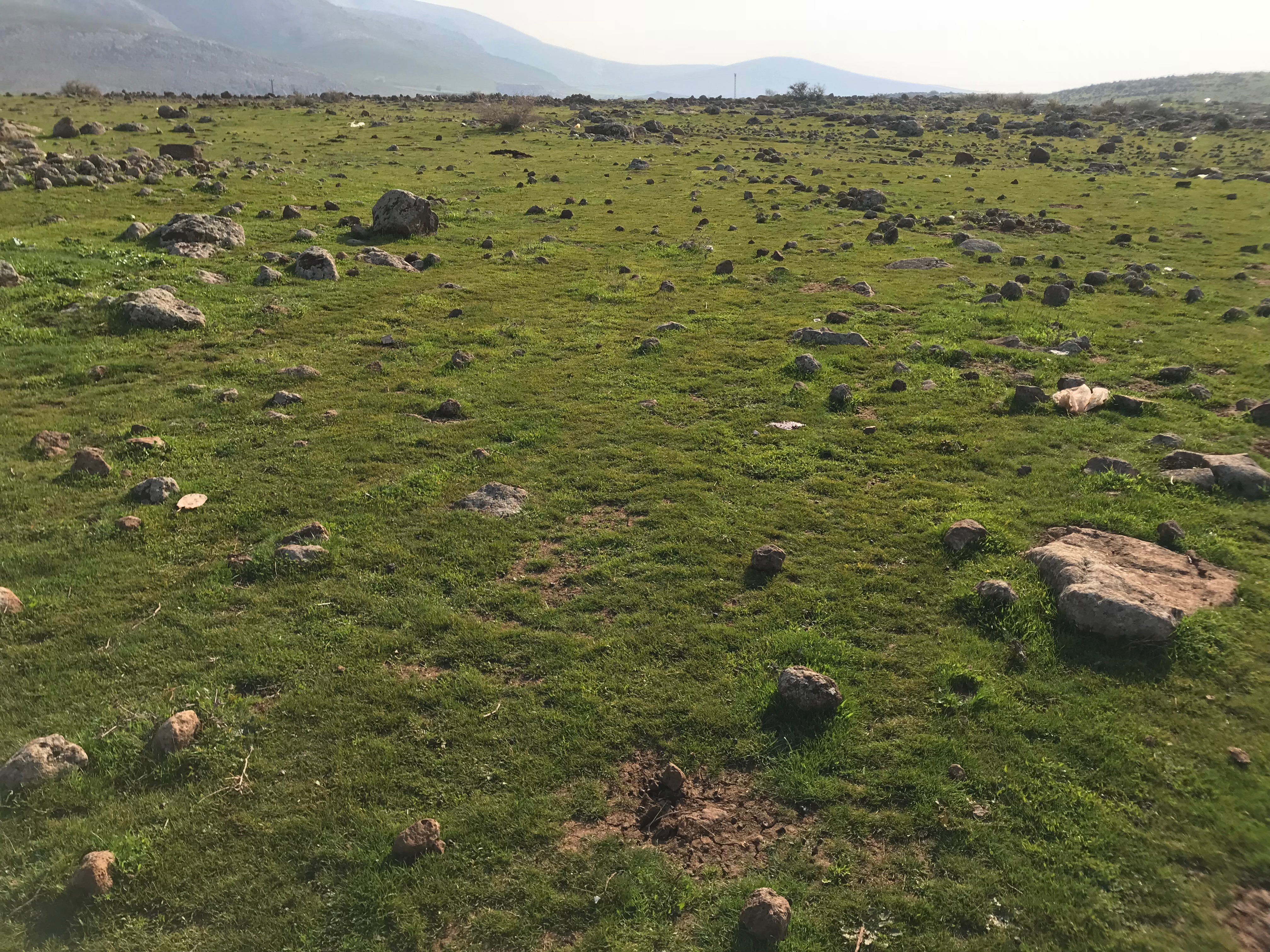
Today, 18 December, 2017, we returned, once again, to ‘the Grove’, this most challenging of the ad-hoc Syrian refugee field worker encampments that we visit. On this expedition, we endeavoured to be ‘smarter’ than in the past and to try and hopefully, to avoid some of the most egregious problems we have previously encountered.
Indeed, this is the only encampment where we have experienced the theft of a bag of foodstuffs off the back of the lorry.
As this occurred whilst the lorry was reversing and to hinder a repetition of that theft, on this outing, we arranged that I would be reversing the van and the lorry would be set up to drive straight off at the conclusion of our time here. The lorry would do no reversing in this encampment.
Additionally, we normally travel past this encampment on our way to a more distant encampment, and visit this encampment on our return, they know we are coming and they are ready for us… maybe too ready.
We felt that denying them this advanced notice may make the encampment more manageable. Therefore, we drove the back way, a much longer route, to the furthest encampment. On completion of that encampment we just arrived at ‘the Grove’ with no forewarning.
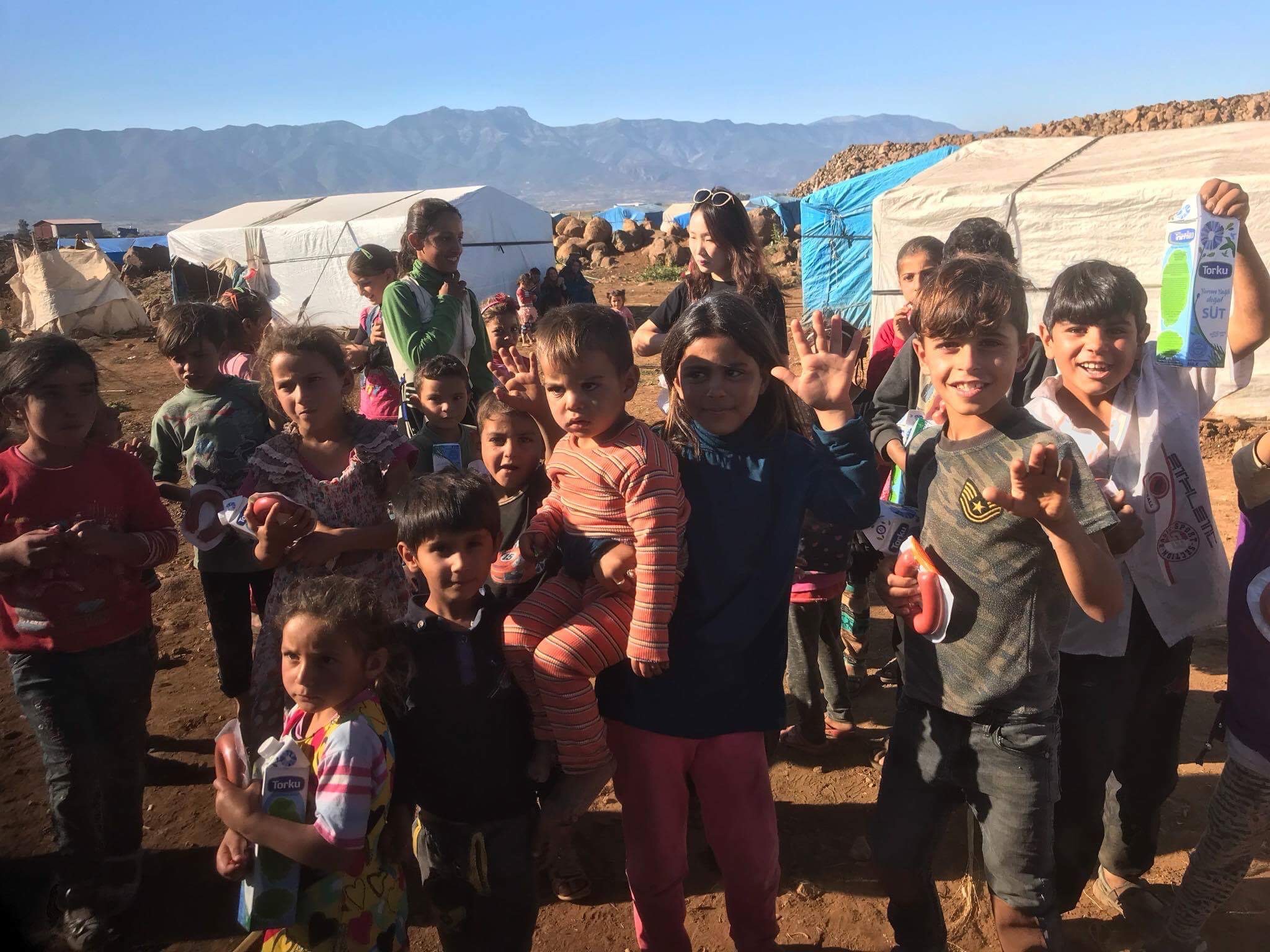
‘The Grove’ is also the encampment where we have tried, and sadly, failed to fully distribute the special treats that have been provided for the children.
However, we are still endeavouring to bless the children and give them these special treats. As the former method had consistently floundered on the rocks of this tumultuous encampment, this time we introduced a new method – just for them. Here we would include the special treats bundled together with, and at the same time, as we provided foodstuffs, pads and where appropriate, nappies and milk. This is not as nice a method, and you can never be certain that the children will actually get the treats – the mums very well may consume the treats themselves, or they may favour one child over another.
Applying this special method, just for this encampment, we strove to ensure that every child on the system had their treat given with the foodstuffs. A side benefit of this method here was the Team was not besieged by an unruly mob or, at times, nearly rabid rabble of children. Oh, and additionally there were no attempts by the children to gain forced entry to the vehicle with a view of pillaging the store of treats.
As we seek to serve this particular encampment, we try to work with the realities on the ground and still accomplish our goals.
Whilst we were processing the various inhabitants from one side of our ‘working zone’, I noted two wee boys, on the opposite side. Both lads were under six years of age. The one boy, slightly taller, suddenly grappled with the other in an obvious attempt to simply inflict pain. This was not rough-housing, nor play fighting, he was going for blood. He was squeezing, punching and twisting to make as much pain for the other child as he physically could.
Before I could intervene, they broke off their clinch. Not a sound was emitted by either.
However, after I turned my back, the victim of the earlier encounter, the smaller boy who had been assaulted, turned and forcefully grabbed his former assailant by the head and drove him vigorously, face first towards the side of the van. Before I knew what was happening, there was the sound of the impact of his face coming into a forceful encounter with the van.
Once again no sound was forthcoming and they broke off their hostilities and scattered.
This really is a very dark, a very sad encampment. Harshness, casual violence, shouting, thrusting, jockeying, striving, grasping for advancement is the norm within this gathering of souls.
And it is in this encampment where a young bride whom we encountered a year previously – she married at 14 years of age – still a child herself, now resides. It is in this harsh and unwelcoming encampment that she dwells with her equally young husband and their baby girl. One of the members of our American team was touched by her plight and purchased some baby things for her and her child. The American, herself, a pregnant mum, wanted to help her and to ‘visit with her’ – the only impediment being she speaks no Arabic and the wee child-bride-new mum speaks no English.
Nevertheless, they spent the majority of the time we were in this encampment, ‘visiting’. Sometimes it is remarkable the degree of communication that can transpire in spite of lacking a common language.
At the end of the day, if any place needs to see light, needs to be exposed to a better way, needs to see love and grace and patience and perseverance, it is this place.
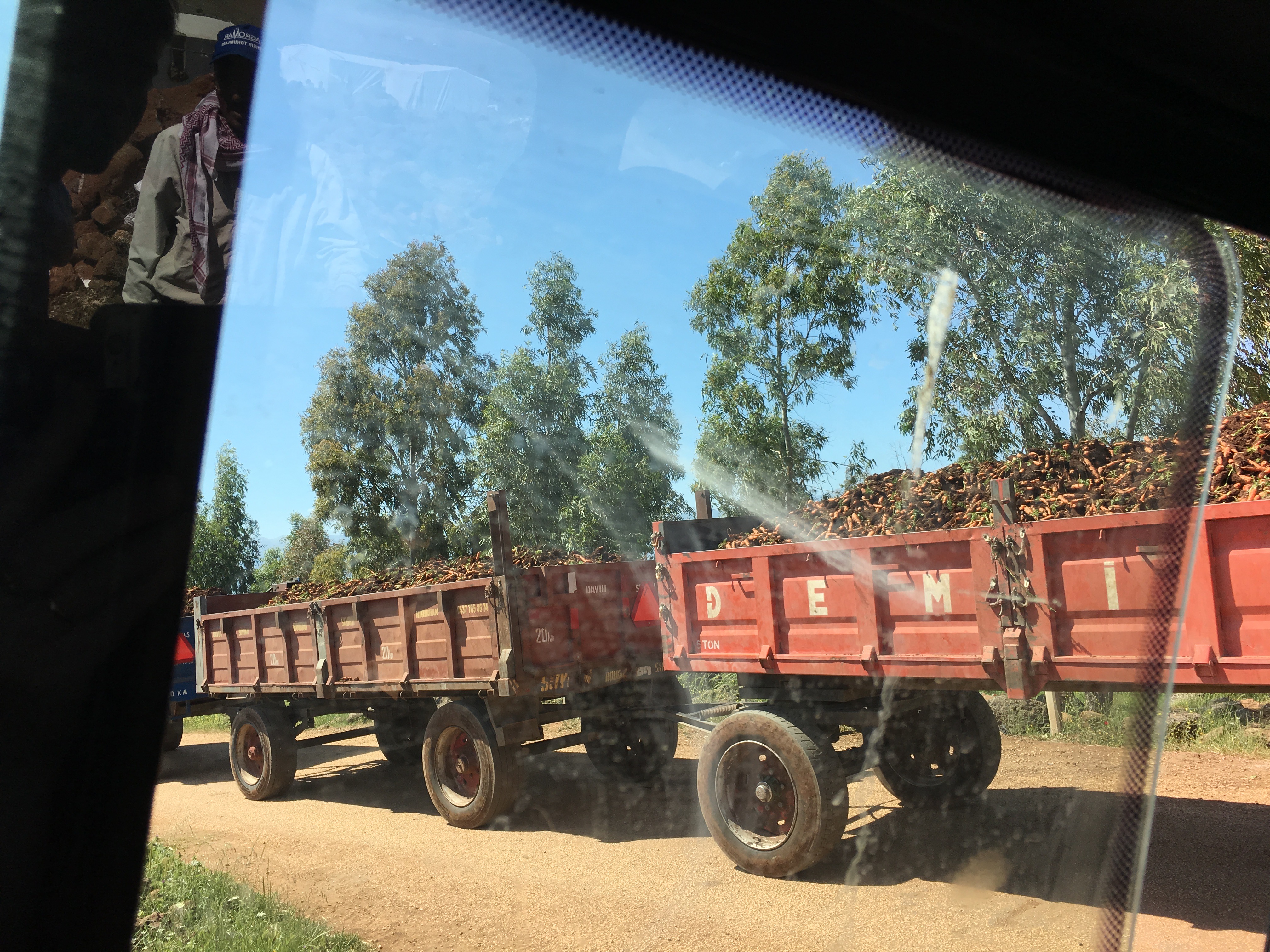
Twice a year is carrot season, the spring and winter. This photo is from the spring harvest.
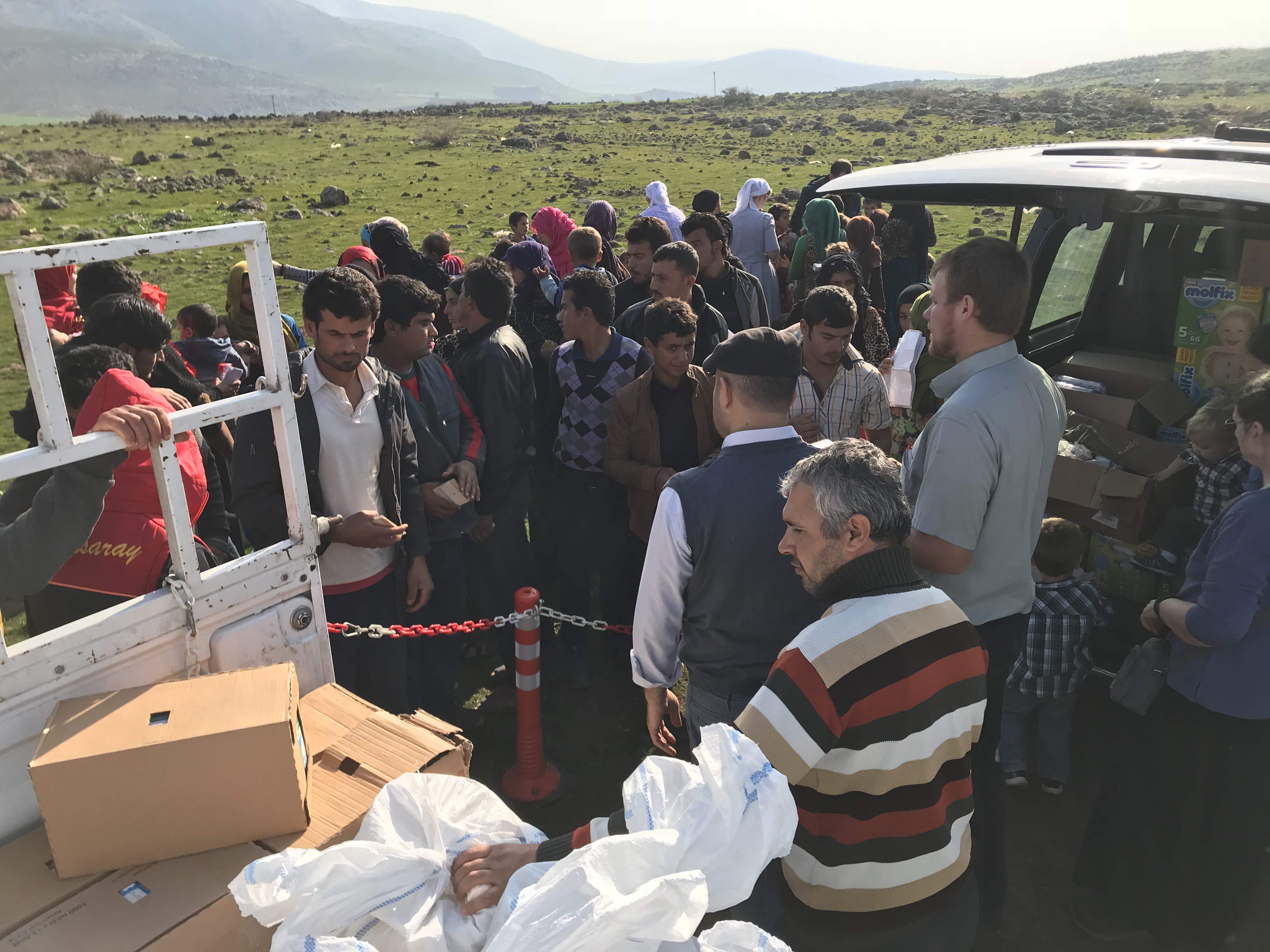
Many of the inhabitants were away in the fields working – this is the season for pulling carrots from the muddy soil – and so on arrival we were not confronted with as large a mob as on our previous encounter. Also, neither of the two, rather problematic, rapacious gang-masters were present. And so on this occasion, our distribution was a bit more manageable and a little less chaotic.
Mind you, the formidable ladies still seemed to think the most effective means to communicate with us, even those of us who speak no Arabic, was to shout emphatically at us – in Arabic – vigorously gesturing all the while.
Nope… absolutely no comprehension on our part.
When we thought we were done… we were not rushing to leave, we wanted to make sure we saw all who were to be seen, but, quietly we were thankful that it seemed to be finished…
… a minibus flew up and skidded to an abrupt halt near our vehicles positioned at the entrance to this encampment… it was transporting some of the missing inhabitants from the fields where they were labouring….
It is known that on our arrival to an encampment we will leave the provision with an immediate member of the ‘registered’ family – but if there is no one from the family present, we leave nothing.
And so, on the arrival of these late-comers, the work carried on…
When, finally, we had worked our way through these belated individuals, we were confronted with a small gaggle of various ones who were presenting to be registered and to receive some foodstuffs.
It has been our experience over the course of the three years we have been engaged in this activity, that at the end of our time at an encampment, that the chancers, the charlatans, the liars come out – and oh, mixed up amongst them can be bonafide late-comers or honestly unregistered new-comers.
Within this cohort was one individual we had dealt with on our previous encounter. Nothing had changed in his circumstance, and no, we were not about to give him anything. On our previous encounter it was determined that whilst he is living alone, and he waits for his family to join him – which he believes will happen at some time in the future, he is, in the meantime, eating from the kitchen of a relative, and on checking the number of people in that family, they were already in possession of the extra needed to feed him. Nevertheless, he keeps trying it on…
Then there were others who presented, but claim they do not have any ID. This is possible – just. But the whole picture taken together, it was unconvincing to me at least.
They were presenting in this context of misrepresentation, dubious presentations, and these two, who were claiming to be four individuals staying together, but there were only two before us, and they were young men with no ID – Turkish or Syrian.
Again, I was feeling unconvinced…
The lack of any ID is hard to accept in this part of the world where everyone has some form of ID – with the very rare exceptions of those who have just fled a disaster. These young men were claiming not to have Turkish ID, fully understandable, but they must surely have their ever-essential Syrian ID.
Grace would have even to give them a bag of foodstuffs – but, unfortunately, I was not feeling very gracious at that point in time.
At a different encampment, or earlier in our time there, I very well may have been more gracious in my response….
Methinks, there be a lesson in here for me… grace over all…
We departed…
From ‘the Grove’ we made our way over to an encampment we have named ‘Isken-1’.
This encampment also looks to be wintering in the fields like ‘the Grove’.
But this is a very different encampment.
There are 185 people registered in this encampment with 59 children between two and ten years of age and 36 babies – which means that fully half the encampment is under ten years of age.
On our arrival, down the poor field road, the sun was pleasantly shining. Vibrant, young, green grass has grown among the multitude of stones in the fields beside the encampment. This vista provided a delightfully rich, captivating and verdant background. The weather was warm. But, most importantly, these Syrian refugee field workers are very different in attitude and behaviour to those in ‘the Grove’.
Here they stand around, in a pleasant cluster, in a non-threatening, patient manner, waiting their turn. There is no shouting, gesticulating, shoving, intimidation or ruckus behaviour by demanding adults crowding in on the zone where the team is working.
The children are, well, everywhere. They are, by and large, clean and clean-conscious. There are no adults driving the children back with sticks – so unlike ‘the Grove’.
The children are friendly and cleaner than you would expect for people living without adequate washing facilities.
I moved away from the vehicles and the crowd and began tossing the children up in the air. They loved it. A small cluster gathered around me asking for ‘their turn’.
Then two young men came towards us, animatedly speaking and gesturing at us in Arabic, which I do not understand. But one word they kept repeating was ‘haram’ which is the same in Arabic and Turkish meaning ‘sinful’, ‘forbidden’,‘unlawful’.
I thought, is it ‘haram’ to toss children in the air? Am I doing something offensive? Am I, inadvertently, doing something wrong?
I speak Turkish. They speak Arabic.
But, with their descriptive chatter, and hand gestures, I began to get an inclination of what they were saying.
I called our bi-lingual minder over and asked him to enlighten me.
It was just as I was beginning to suss out. They were concerned that I, a white beard, an older gentleman, was tossing children in the air… a vigorous and demanding action. They felt and feared that I may do myself an injury in the effort. It was, in their view, ‘haram’ for the children to be asking to be so entertained and played with.
They were merely concerned for the ‘old man’.
Later in the distribution and this was the last encampment of the day, actually of the year… the next distribution is planned for 2 January 2018, I mounted the lorry and moved a number of bags from the front to the back of the lorry to be ready for distribution.
A couple of the children were by the lorry, and I lifted them up into the lorry – they really enjoyed being inside the ‘forbidden zone’.
As I was moving the bags, they too, spontaneously begin moving the bags… mind you the bags are disproportionately large and heavy for them to move, but with all their effort, they would tug, pull and cajole the bags towards the back of the lorry.
They were being helpful, without being asked.
When it came time to alight from the lorry, I called them, in Turkish, I do not know Arabic and they, in truth, do not know Turkish, but they understood. They came and were happy to be lifted down – out of the desired, prized location. No resistance, no demanding to remain there, they quickly and happily acquiesced to my request.
Later, when it came time to move the rest of the bags to the back of the lorry, a young Syrian refugee mounted the lorry and shifted all the remaining bags forward. No one asked him to, he saw the need, and jumped in to do it.
He was being helpful. There was nothing extra in it for him.
This is so unlike ‘the Grove’.
In ‘the Grove’, the van is always locked and there is no way we could trust anyone up on the lorry. Sometimes the young lads have offered to assist… but always and obviously with an eye some the reward they expected to gain for doing so…
Here in ‘Isken-1’ the van remains unlocked and help is welcomed in the lorry.
Two children were holding my hands, and we were walking beside the lorry. There was some mud to one side, and the person on my left accidentally stepped in the mud. Her sandal and toes were soiled with mud.
She immediately stopped, got a piece of paper and commenced throughly cleaning her footwear, and then her toes. She is aware and striving to be clean.
So unlike ‘the Grove’.
In the end, some people came who ‘used to be in a nearby encampment’ (we called it ‘Isken-2’). That encampment is no more – the inhabitants have either moved to ‘Isken-1’ or the relatively nearby town of Kirikhan.
It became clear that these late comers are no longer living in the fields, but have come from Kirikhan, and we do not provide for those who are not living in the fields.
In any event, the last bag came off the lorry, so there was no more to give. They didn’t press, which is also an established tell of those who are ‘trying it on’.
We still had some ten or so litres of milk left on the lorry. Normally we would return them to Antakya, and take them out on the next run.
But here, I grabbed the box and gave a litre of milk to each small child I saw until they were gone.
It was a good day. The team will carry on the work in the new year, but it was our last day before we return for our annual sojourn in the United Kingdom.
It was a good mix of encampments.
And, once again, some more lessons for me to learn had come to the fore.
Truly it was a good contrast between the two encampments; one, which you naturally want to help and enjoy, and one, you realise is the neediest of them all and we really need to prioritise and spend time there being loving, caring, gracious, serving, patient, understanding and always being true to who we are in Christ and allowing Him to shine forth in us.

 4,000 fine AND having to appear in court (!). The fine would have been bad. Appearing in court would have been very disruptive and frankly unappealing.

 In contrast, on the back side of the hill and nearer the summit, a massive concrete pillar soars into the sky. Still under construction, it is to be a new communications tower. The goal is to replace the rather ugly cluster of communication and television towers on top of Çamlıca, moving them to the top of the new tower. That will be a marked improvement.